Workable adjoining roofing
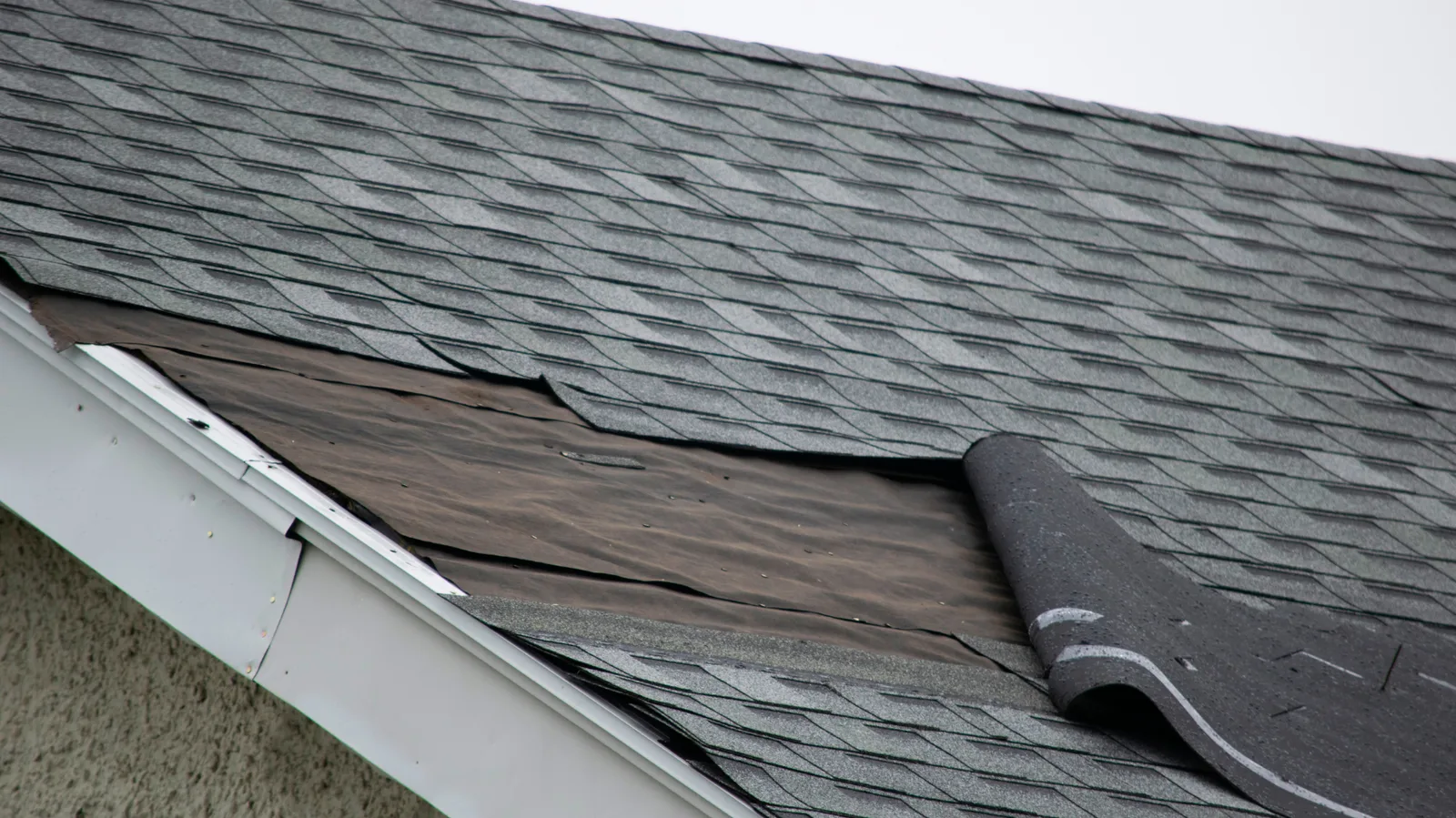
Surrounding shingles need to lift and reconnect without tearing or breaking. Brittle or severely deteriorated material can make the opened area larger than the original defect.
A roof repair needs to solve the opening that lets water in and connect properly to the roof around it. Replacing the obvious damaged piece is only part of that work.
We help Shawnee homeowners understand the repair, the surrounding materials and anything that would widen the job. Request a free roof inspection to get a closer look.
Free roof inspections. A roofer walks the roof and helps explain the work it needs.
A split rubber collar around a plumbing vent leaves an opening beside the pipe. The repair needs to address the collar and its flashing base, then reconnect that detail with the shingles and underlayment around it. A bead of sealant across the visible split does not renew a deteriorated flashing assembly.
At a wall or chimney, flashing directs water across a joint between different surfaces. Loose, corroded or poorly integrated flashing can let rain behind that joint. Repair can involve opening adjoining shingles and, where necessary, part of the wall interface so the new work ties into the water-control layers.
Damaged shingles are another repair. The replacement shingle needs to fit the system and be fastened and sealed correctly without breaking the neighboring material. We look at the specific failed detail and the condition around it before treating every leak as the same patch.
A durable repair needs more than a new piece of covering. These conditions determine whether the work can stay local.
Surrounding shingles need to lift and reconnect without tearing or breaking. Brittle or severely deteriorated material can make the opened area larger than the original defect.
The repair material needs to suit the roof system, including its dimensions and installation method. New shingles can also look different from weathered ones even when the product is a reasonable match.
The deck must hold the repair, and the underlayment and flashing need integrated connections. Soft wood or deteriorated layers beneath a small opening require additional work before the covering is restored.
A roof’s age is useful background. It does not replace checking the condition needed for this particular repair.
We examine the covering and details around the concern. Water can travel before it appears indoors, so the ceiling stain alone does not identify the roof opening.
The work has to reach the failed connection. A flashing repair might need more surrounding covering opened than a simple shingle replacement.
Damaged underlayment, flashing or deck needs to be addressed as part of the defined repair. Concealed damage changes the scope rather than disappearing under a new surface.
Compatible covering, fastening and water-shedding laps restore the repaired area’s connection to the surrounding roof. Temporary protection remains a separate step when the permanent work cannot be completed immediately.
A sound local repair and a wider reroof solve different conditions. The inspection helps establish which conditions are present; the examples below explain why the size of a stain or the number of missing shingles is not the whole answer.
Compare what needs checking, what lets a repair stay local, and what adds work.
An inspection establishes which conditions are present on your roof.
Compare repair and replacementRoof repair pricing follows the work required to reach and correct the problem. Height and slope affect access. A roof-to-wall repair can involve roofing and wall connections. A small covering defect with damaged decking underneath involves more material and labor than the surface alone suggests.
The material and its condition also matter. A repair that can reconnect workable shingles has a different scope from one that must open a broad brittle area. Existing layers, unusual details and earlier repairs can change how the new work joins the roof.
The roof repair cost guide explains those differences. A replacement calculator models a different job and should not be used as the price of a leak repair.
Yes, when the damaged area can connect to suitable surrounding material, sound support and compatible flashing. The inspection looks at those conditions together. A small visible defect does not guarantee a small repair, and wider wear does not automatically settle the decision before the roof is examined.
The entry point, an adjoining connection or affected layers might still need work. Water can also travel from a different opening to the same room. Rechecking the likely path and the repair’s connections is more useful than adding another surface patch without understanding the cause.
See how roof leak repair follows the water path.
They can look different. Weathering, product availability and manufacturing changes affect appearance. The repair must first fit the roofing system and connect properly; its visible match is a separate part of the choice.
Age gives background, but the condition of the actual roof controls the repair. Workable adjoining shingles, compatible materials, sound decking and correct flashing connections are necessary. Widespread deterioration can make replacement worth considering alongside the repair.
Call and say water is entering now. Stay away from sagging ceilings and water near electricity, and do not climb onto the roof. Temporary protection and a permanent repair are separate work decisions.
Read the urgent roof repair guidance for the immediate safety concerns.
Tell us what you noticed and where the property is. A free roof inspection helps move the conversation from a visible symptom to the work needed at the roof.
(913) 354-3947