What Standing Water Means for a Commercial Roof
Water left on a low-slope roof raises a useful question: is the outlet blocked, is the roof’s drainage shape wrong, or is a deeper condition involved? The water alone does not identify the repair.
Shawnee KS Roofing Co helps building owners connect the drainage concern with the roof system and the way the property operates. A free roof inspection is a useful starting point when you have noticed water or a recurring leak.
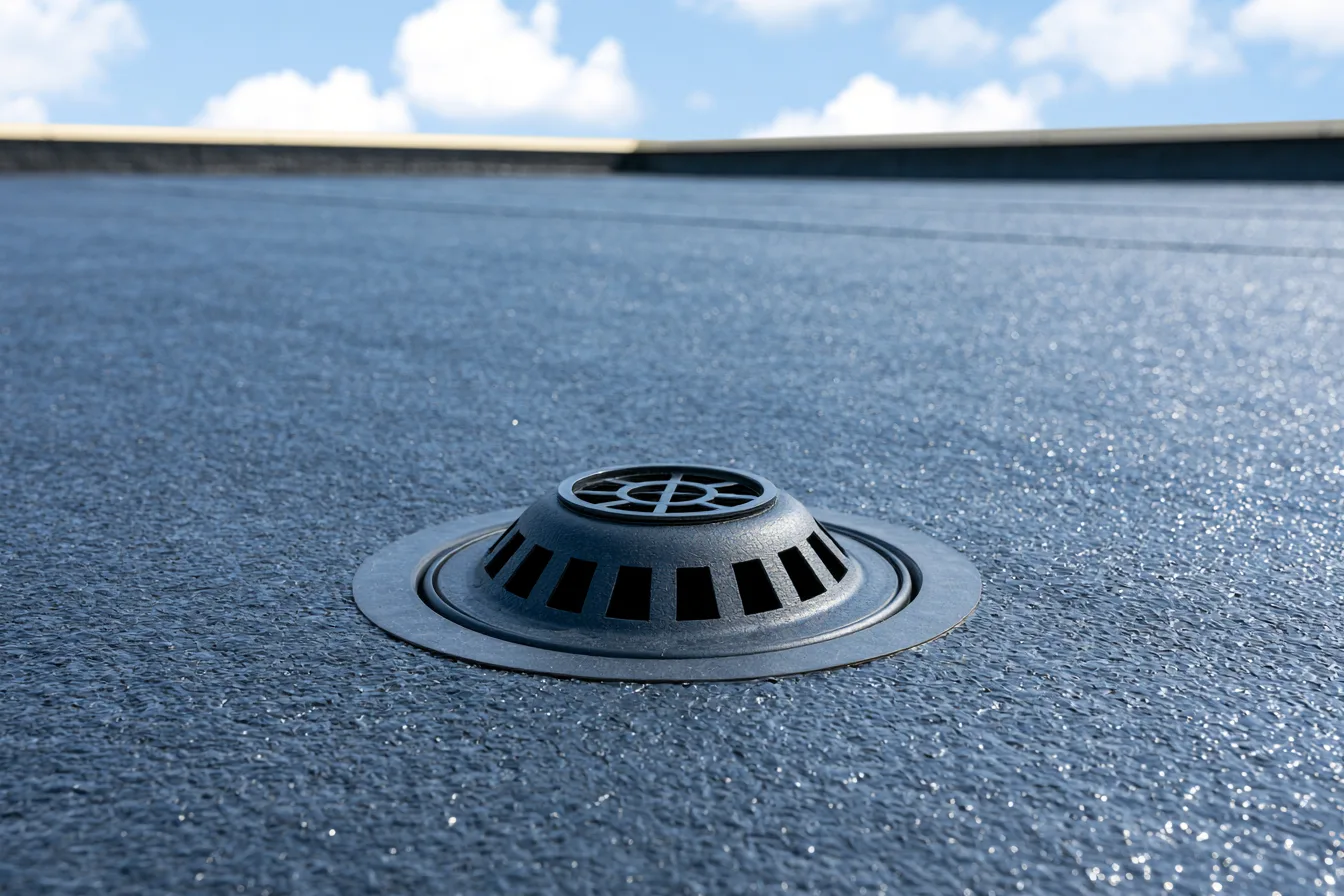
A Drainage Problem Is More Than a Puddle
A low-slope roof still needs a route for water to leave. Drains and scuppers, the openings through a parapet wall, collect or discharge that runoff. Debris at an outlet is one problem. The shape of the roof and insulation, or movement in the supporting assembly, can create a different one.
Clearing an obstruction does not correct a low area that cannot reach the drain. Changing drainage geometry is also a different job from placing a compatible patch over a membrane puncture. The work needs to establish which part of the water path is failing.
The building’s use adds context. Rooftop equipment, traffic routes and changes made during service work can interrupt the surface or affect access. The roof has to be considered as a working part of the building rather than an isolated sheet of material.
For the direct repair choices, see flat roof repair.
What Needs Looking at Below the Surface
The membrane, its seams, the drain connection and the flashing around equipment curbs need to be examined together. A leak near a rooftop unit does not prove the curb is the only defect; water can move within the assembly before it appears inside.
Underlying moisture is another question. Surface appearance cannot by itself establish whether insulation and deck are sound and dry. Where the project needs it, a separate moisture assessment or sampling can define affected layers. That specialist work has its own scope rather than being an automatic part of a free roof walk.
Wet insulation or damaged support changes the options. A fresh coating cannot dry or replace those layers beneath it. A restoration system needs a compatible, prepared and suitable existing roof, with necessary repairs addressed first.
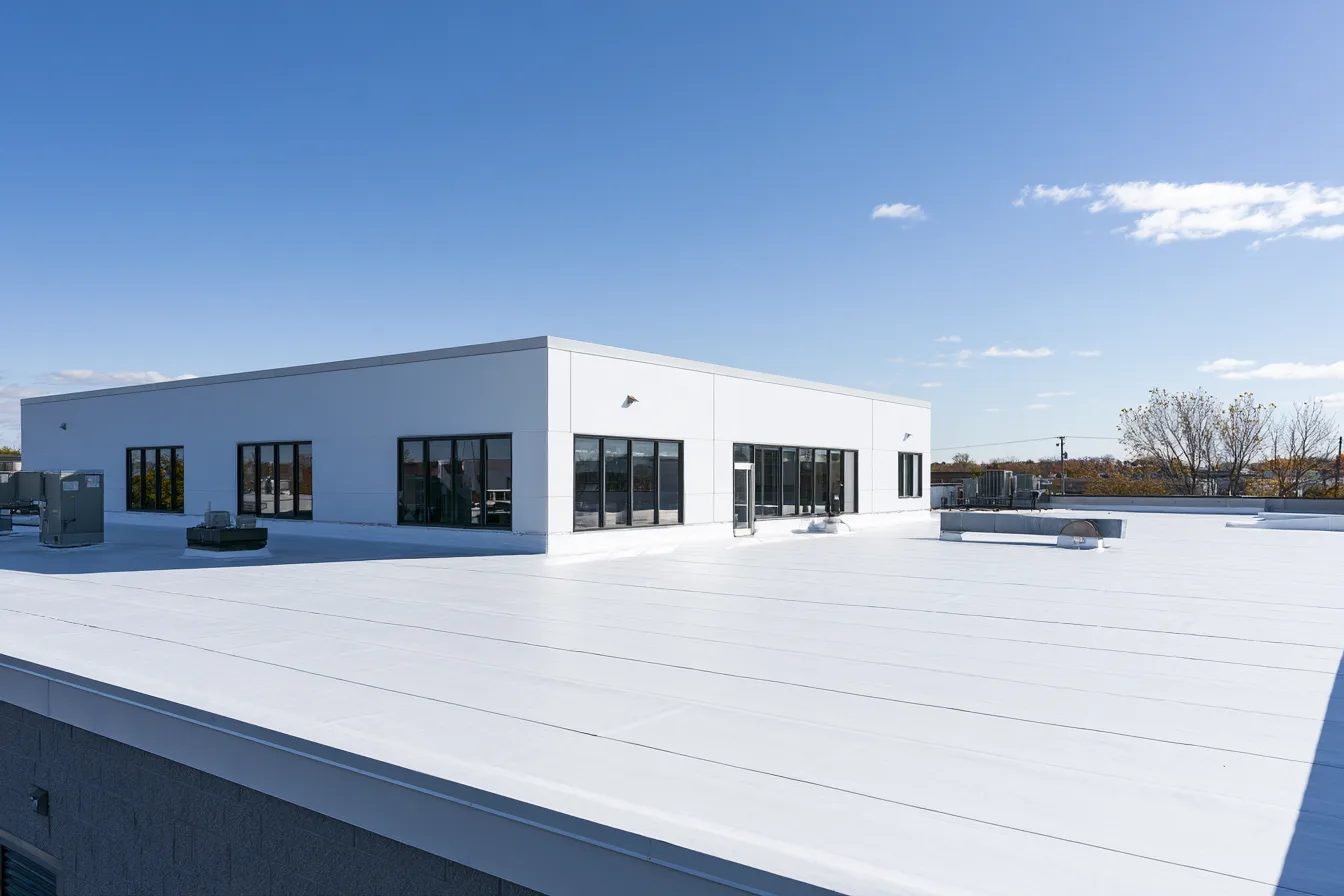
Repair, Drainage Work or a Wider Reroof
When the concern is a defined drain, flashing or membrane defect and the surrounding assembly is suitable, focused work can address that connection. If drainage needs a design correction, that change belongs in the project rather than being hidden behind the patch.
Where moisture or deterioration reaches farther, affected layers can require removal and replacement. A recover or restoration needs the existing roof to meet the selected system and applicable requirements. It is not permission to leave failed or wet material under a new surface.
The practical comparison is what each option resolves. Repair corrects a defined failure. Restoration renews an eligible surface after appropriate preparation and repairs. Replacement can address the broader membrane, insulation, attachment and drainage scope.
Our commercial roofing service brings those options together for the building-owner decision.
Talk About the Building and the Roof
Tell us where water is collecting or where it is appearing indoors, the roof system if you know it and any equipment or access constraints. “Unknown membrane” is a useful answer when the system has not yet been identified.
Also mention how the building operates. Tenant entrances, deliveries, stock and air intakes can affect preparation and work planning.
If you have a drainage or leak concern, start with a free inspection. We can discuss what the actual roof needs and which further assessment or roofing work fits the condition.
Use the contact page to discuss the building, or call (913) 354-3947.